Initial lessons from real-world implementation of an AI-agent eye clinic in China
Early lessons from AI-TEC on data quality, clinical workflows, and clinician feedback when bringing AI agents into ophthalmic care.
My role
I contributed to data collection and processing and was a main contributor to the development and deployment of the AI-TEC system.
Overview
This Comment discusses early experience with the AI-Agent Augmented Tsinghua Eye Clinic (AI-TEC). Its central concern is how AI can fit into clinical care through coordinated workflows, clinician engagement, and evaluation of clinical value.
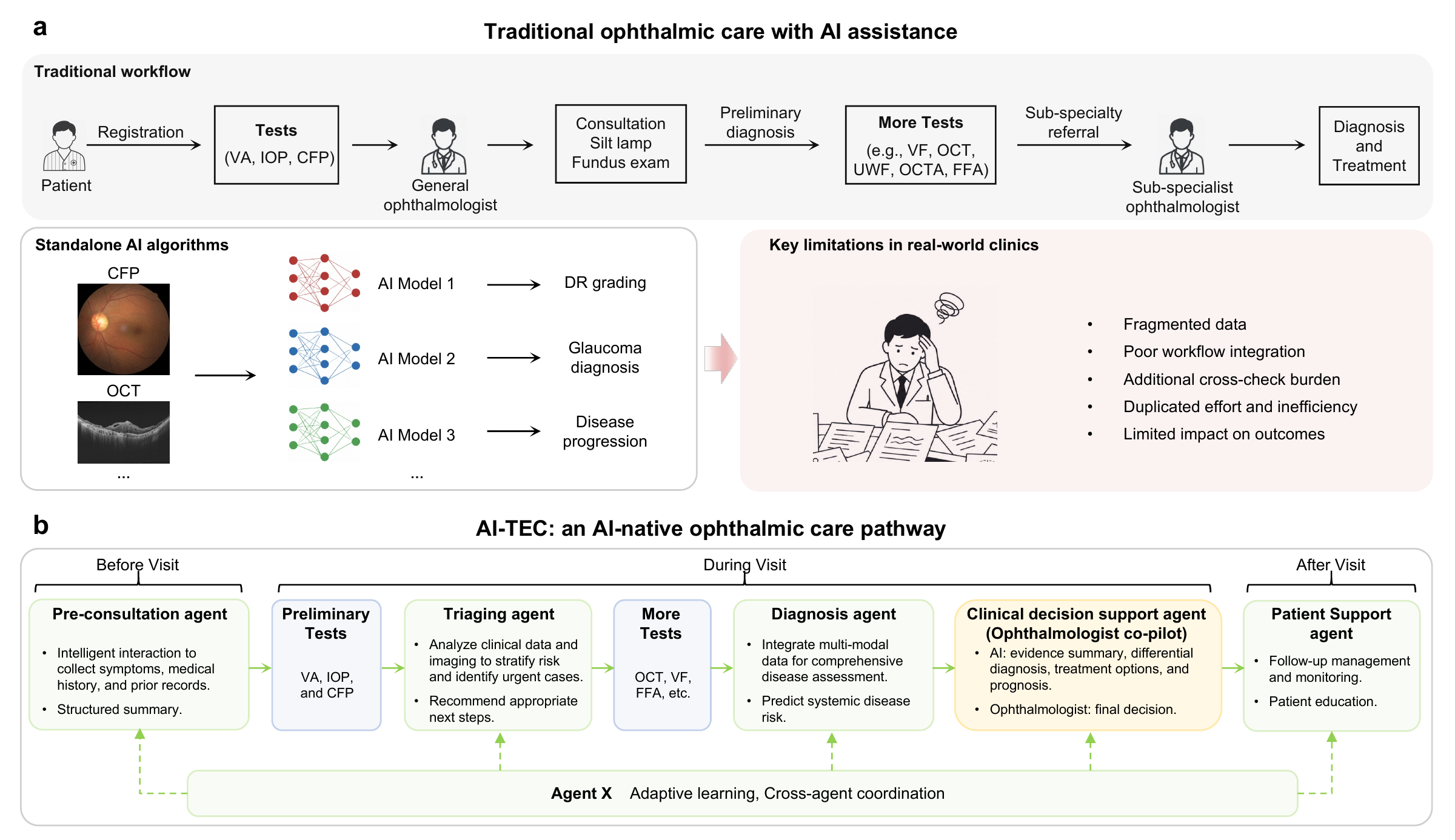
The care pathway and its implementation
The proposed framework connects agents for pre-consultation, triage, diagnosis, decision support, and patient follow-up. A prototype was integrated into Beijing Tsinghua Changgung Hospital in November 2025, with capabilities including pre-consultation and fundus image analysis. The broader pathway illustrated above describes the framework’s intended coordination across care.
Three themes emerge from the implementation experience:
- Data quality: expert review of clinical data matters for model performance.
- Workflow integration: usability and the operational burden on clinicians affect adoption.
- Continuous feedback: close collaboration between clinicians and developers supports ongoing improvement.
These are early implementation lessons. The article calls for evaluation of effects on care delivery and patient outcomes; strong image-analysis performance alone does not establish those benefits.