How nanophotonics can drive optical computing toward practical applications
A review of photonic computing platforms and the materials, fabrication, and integration requirements for practical AI and scientific computing.
My role
I drafted the “Large-scale AI models” subsection within the “Nanotechnology-enabled optical computing” section.
Coverage: People's Daily · 人民日报客户端 (opens in a new tab) DeepTech深科技 (opens in a new tab) All coverage
Overview
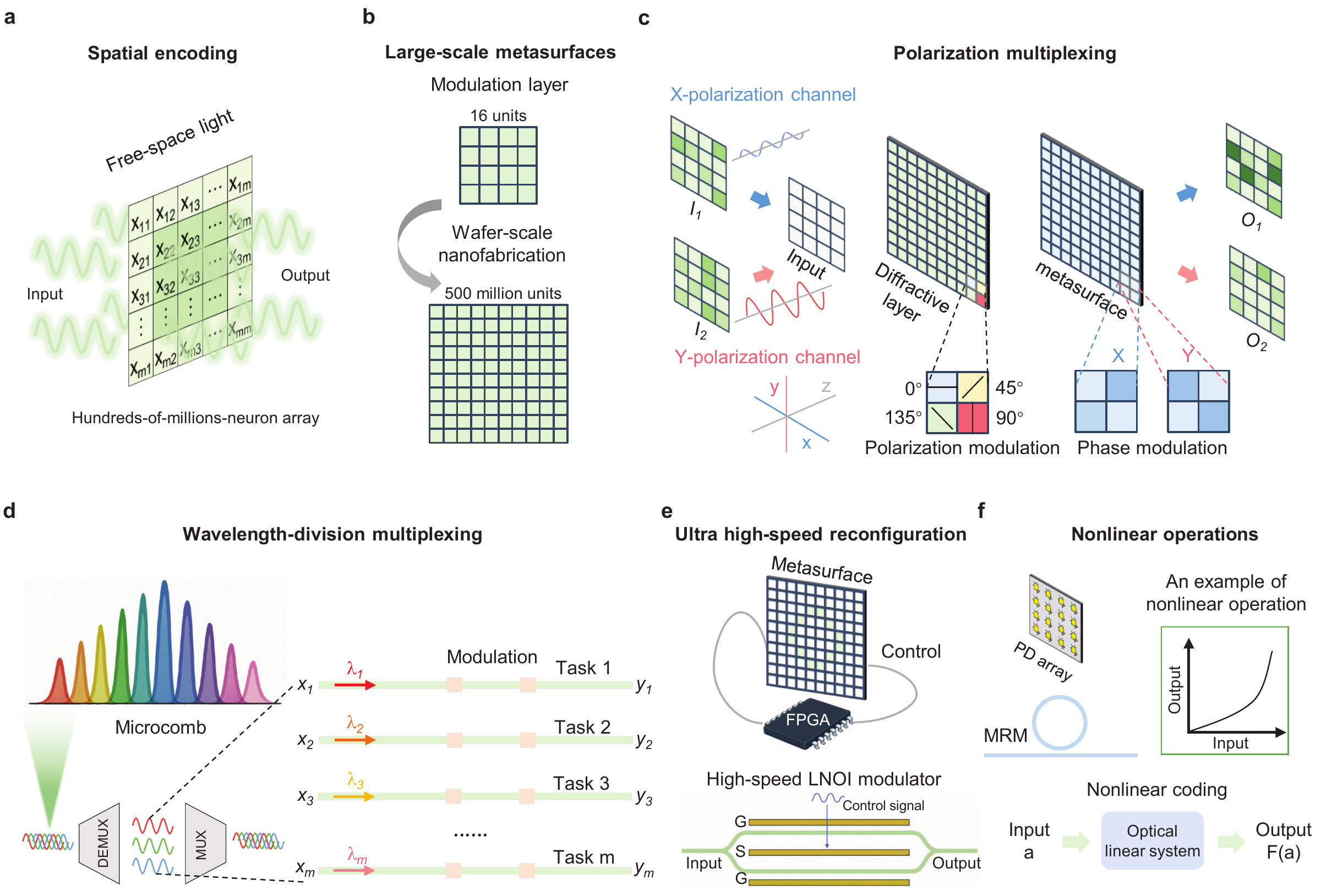
Optical computing uses the physical properties of light to perform computation. This review examines photonic platforms with demonstrated programmability, integration density, and stability, and considers their suitability for large-scale AI models, edge computing, and logic and scientific computing. It connects these application demands to requirements for nanomaterials, architecture, fabrication, and system integration.
From devices to practical systems
The review considers how computing scale, precision, energy efficiency, and programmability interact at the system level. It brings together two perspectives: what existing materials and manufacturing processes make possible, and what particular applications require from a usable computing platform. Representative commercial systems provide further context for assessing progress toward deployment.
The article synthesizes existing work into an assessment of engineering requirements and directions for future development.
Media coverage
- (opens in a new tab)
People's Daily · 人民日报客户端
我科研团队提出光计算走向实际应用的量化标准
- (opens in a new tab)
DeepTech深科技
光计算如何走向实际部署?清华、上交提出光计算走向实用化的技术路线图
- (opens in a new tab)
清华大学自动化系 Institutional news
清华大学自动化系与上海交通大学集成电路学院团队联合提出光计算走向实际应用的量化标准
- (opens in a new tab)
上海交大集成电路&信电学院 Institutional news
陈一彤助理教授课题组联合戴琼海院士、吴嘉敏副教授团队提出光计算走向实用化的“技术路线图”